Scarcity shapes everything
Drylands, including hyper-arid, arid, semi-arid and dry sub-humid zones, cover roughly two-fifths of Earth's land and are home to billions of people. In true deserts, rainfall is low and unpredictable, temperatures swing sharply between day and night, and soils are often thin or salty. Plants and animals respond in two broad ways: by enduring drought with water storage and dormancy, or by escaping it, sprouting and reproducing rapidly after rare rains. Either way, timing and partnerships matter as much as toughness.
Fog deserts: the Atacama and the Namib
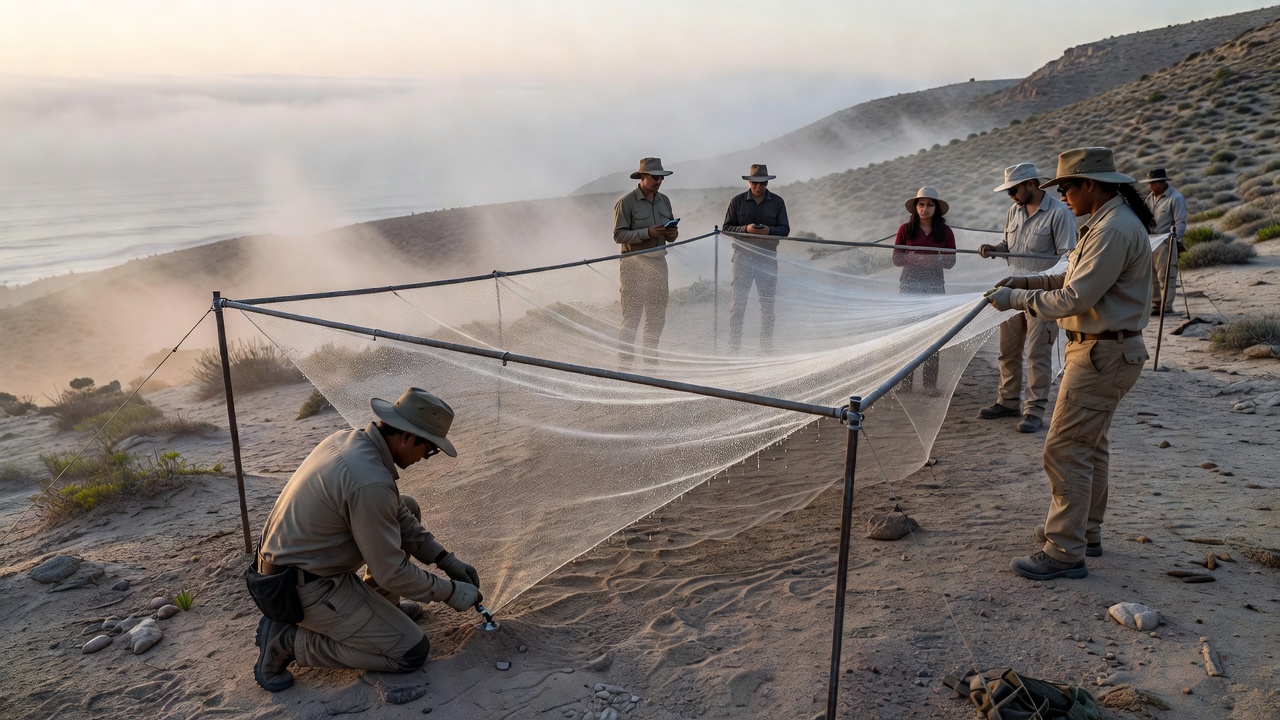
The Atacama in Chile is among the driest non-polar places on Earth, with some weather stations recording almost no rain for years. Yet on coastal hills, a sea fog locals call camanchaca drifts inland and supports "lomas": seasonal fog oases of flowering herbs, cacti and lichens. Communities such as those around Chungungo have used fog-catching nets to collect drinking water, building directly on this natural process.
Across the South Atlantic, the Namib Desert of Namibia and Angola works similarly. Fog rolling off the cold Benguela Current feeds lichen fields, which shelter insects. Some tenebrionid beetles, often associated with the genus Onymacris and Stenocara, tilt their bodies into the fog so droplets run toward their mouths. The welwitschia, a plant with only two leaves that grow continuously from the base throughout its life, also benefits from fog moisture.
- Cold Benguela Current
- Coastal fog
- Lichens & beetles
- Geckos & birds
- Brown hyenas & jackals
The Sonoran Desert: a pollination calendar
The Sonoran Desert of Arizona and northwest Mexico gets rain in two seasons, which helps explain its unusually rich plant life. The saguaro cactus stores water in pleated stems that expand after storms. Its night-opening flowers are visited by the lesser long-nosed bat, which migrates north from Mexico following a "nectar corridor" of blooming cacti and agaves. The bat was removed from the US endangered species list in 2018 after recovery efforts that included protecting roost caves and agave stands. The Tohono O'odham Nation has long harvested saguaro fruit at the start of the summer rains, a practice that marks their new year.
Biological soil crusts
Succulent Karoo, South Africa and Namibia
Socotra, Yemen
People in desert systems
Deserts have been inhabited for millennia. Herders, oasis farmers and foragers carry precise knowledge of where water lies, when plants fruit and how to rest grazing land. Conservation that ignores this knowledge often fails. Programmes that pay local rangers, map water points with elders or support community conservancies, as in parts of Namibia, tend to protect both wildlife and livelihoods.
Observation panel: desert fieldwork etiquette
- Never step on dark, lumpy soil crust; follow existing tracks.
- Do not share GPS locations of rare cacti or succulents.
- Carry out all waste, including fruit peel, which decays slowly.
- Ask permission before entering communal or sacred land.